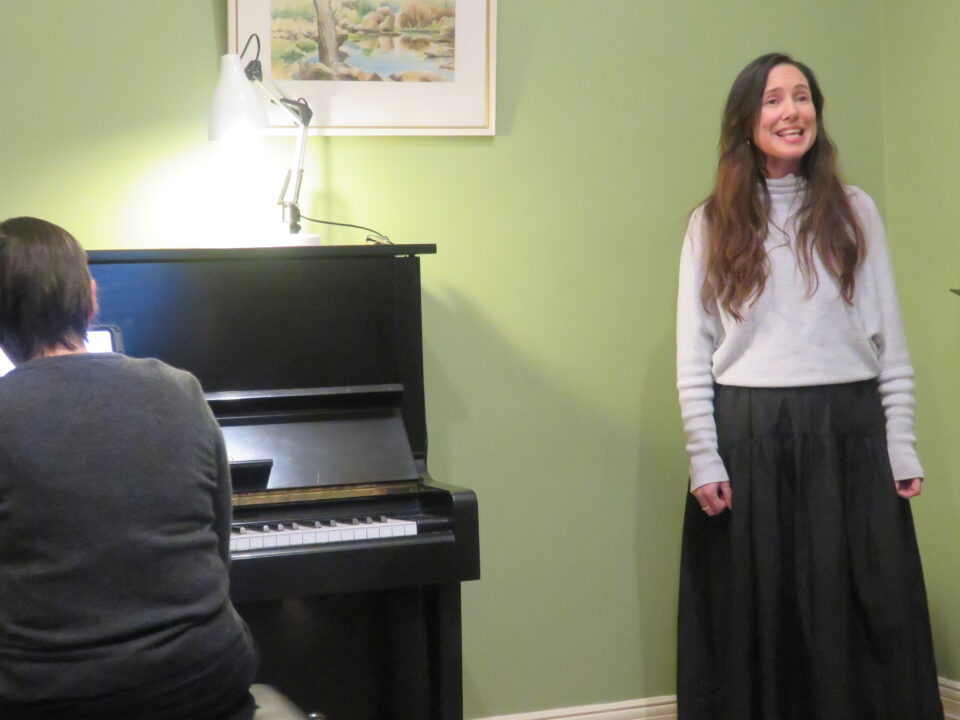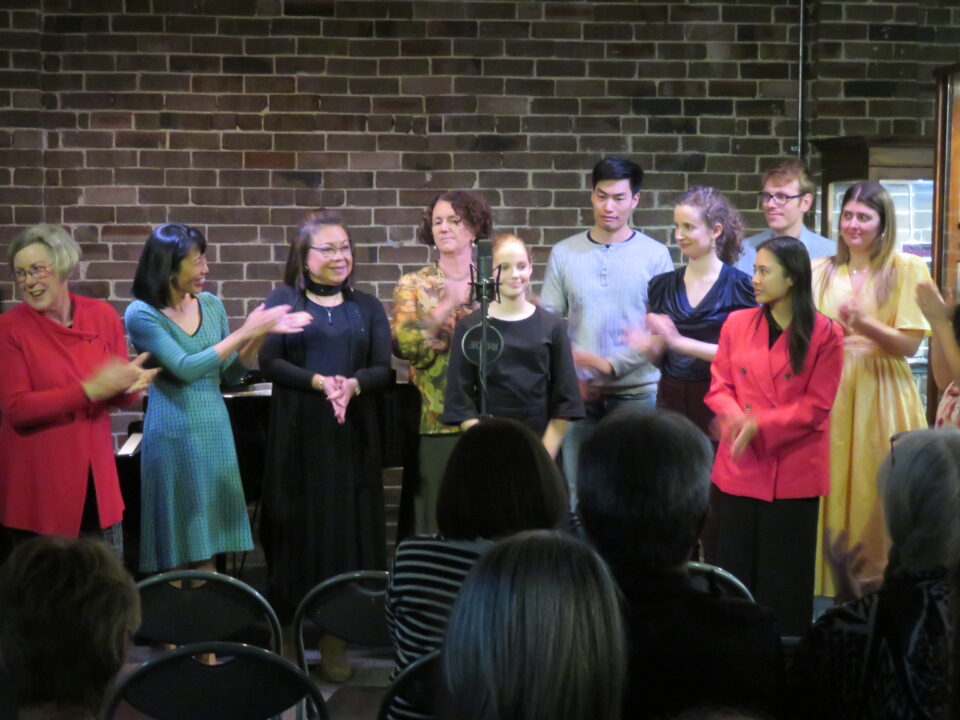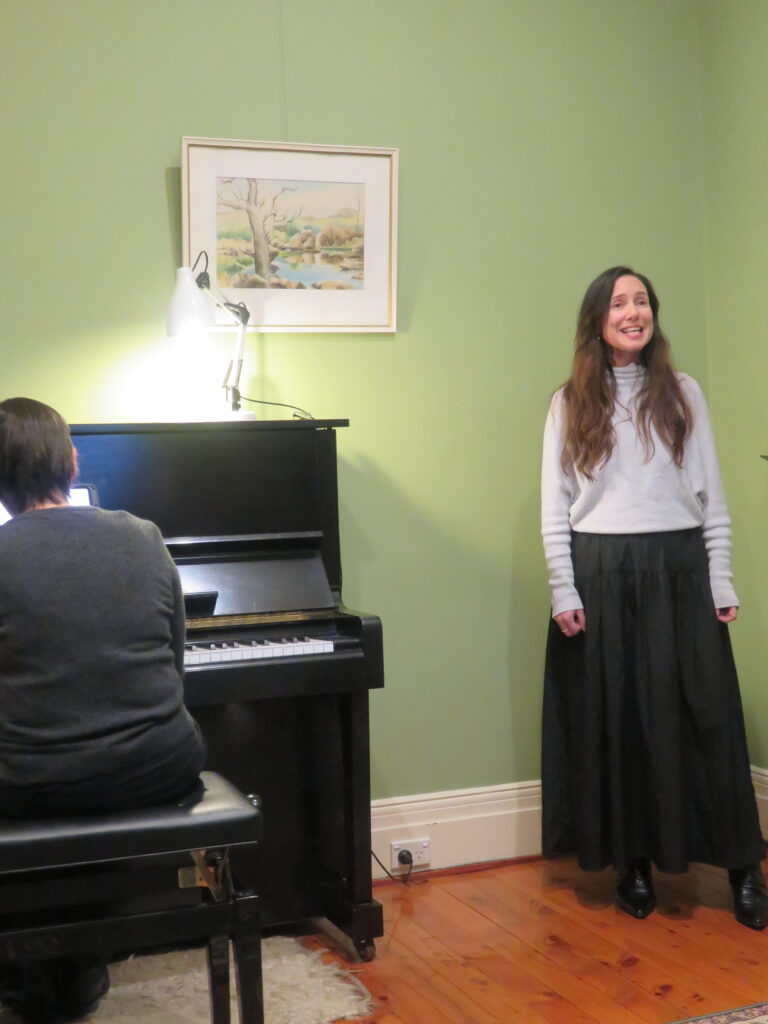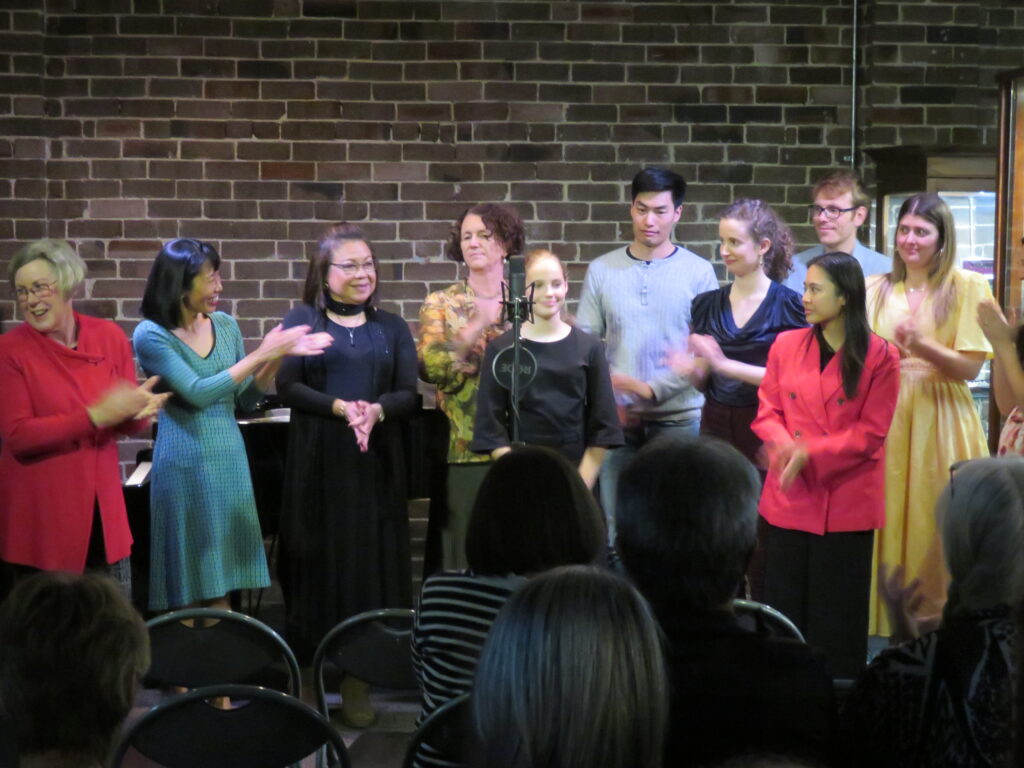

Our singing students are gearing up to perform on 27 June – at our first studio concert since 2019! So, now is a good time to take a look at the elements of performance and how to make it as fun, engaging and rewarding as possible.
For these tips, I’ve drawn on one of my favourite resources, The Performer’s Voice: Realizing Your Vocal Potential (2006: W. W. Norton & Company) by US voice consultant, the late Meribeth Bunch Dayme.
Preparation
Performing well in anything requires preparation. And for singing, together with regular singing lessons and rehearsal, observing others also helps you learn and prepare.
Exercise
Watch your favourite performers and consider what you like most about their performance style. It could be their slow manner (Tony Bennett); the way they play with a song and use their energy (Ella Fitzgerald, Dianna Reeves, Bobby McFerrin, Kurt Elling, Audra MacDonald, Bruno Mars); the simplicity of sung words matching their body movements (Barbara Bonney, Sia, Emma Pask).
- Notice the physical aspects of their delivery:
The appropriate use of their hands.
- Are their eyes in contact with the audience?
- Are their non-verbal messages in balance with their physical movements or is there a contradiction? e.g. When singing the word ‘long’ and the singer’s hand gesture is short. When singing about a calm scene, the singer is jerky and moving excessively.
Overall, are you absorbed in the message of the song via the singer’s performance?
 Practice

Practising your delivery of a song matters as much as perfecting your vocal technique itself. Visualisation and mindset are critical here to create space for positive thoughts, confidence and imagining yourself performing well. As Meribeth Bunch Dayme advised: “We all carry a suitcase of attitudes and preconceived ideas of how we need to function in a variety of situations, including performance. If we practice replacing negative thoughts with thoughts such as, ‘I want to be here’, we … encourage an atmosphere of openness, sharing, energy … both on a subconscious and conscious level.”
Exercise:
The following visual feedback and visualisation ideas can help in your practice. A quiet space is best for these:
- Use a mirror or your phone’s video camera to record your rehearsals.
- Choose something you want to focus on each time, e.g. posture, facial expression, hand gestures, words.
- Picture yourself standing in a way you will be most at ease, feeling comfortable, feet evenly spaced, posture aligned.
- Imagine yourself on stage for your performance or audition: the people listening, the lights, your gaze, your connection with the accompanist, the story you’ll tell.
- See yourself creating an atmosphere where people will want to hear more.
- Feel the physical ease in your throat and hear yourself sing the message of the song, the way you want to express it.
- Ask yourself ‘how would I like people to describe my singing’? Effortless; expressive; natural; with presence. What do you want your audience to take away?
- Be positive: use phrases that set you up to succeed: “I’m capable of doing this”; “I can do my best”; “I will do this”.
Performance
Whether you’re singing to three listeners or 300, you need to convince them your performance is for a reason. Being genuinely interested in and engaged with the subject matter of your song is vital for this.
And leave room for mistakes, because each performance will be different to how you have practised it. Nerves can play a part, as does memory. You are more likely than your audience to be concerned by a mixed word, a repeated phrase or a slight jumble of vowels, so keep going, doing your best.
Presence
Simply standing on a stage and singing a song does not make for a compelling performance, no matter how good you sound. How you inhabit your space and the character of your song are what truly move an audience. This is presence, which can encompass the following attributes:
POSTURE: Flexibility, responsive posture and mobility add presence to your performance. Balance and alignment create a commanding energy of engagement in your song.

EYES: Sparkling eyes reflect feeling and demonstrate you are thinking about your song’s content. Roaming eyes suggest self-consciousness, not being fully present, and thinking of one word after another, rather than the whole song.
While individual eye contact is not necessary a 180-degree slow scan of the room is effective, in relation to the song content and shows you acknowledge your audience.
HANDS: Go through your song and look for words or phrases where a hand gesture would work, e.g. for the word ‘heart’, does it make sense to gesture to your heart?
Choreographed hand gestures can be effective, but too many, or short, sharp hand movements are distracting. Often, it is better to let the words of the song do the work, without excessive hand gestures.
Fine-tuning these performance elements means you can relax and enjoy the actual experience. On the day, make sure you acknowledge your accompanist and other collaborators, too. The applause from the audience will be your reward, acknowledging the work you have all done leading up to this moment.
Want to perfect your performance skills? An Opus Package of 10 lessons with expert singing teacher Kathleen Connell helps you work towards specific performance goals. Get in touch.