Not all singing teachers are the same. How to find the right one for you

If you’re new to singing, or have some experience and want to take it further, it’s important to choose a singing teacher with enough experience to get you where you want to go. Working with a singing teacher, you’re also building a relationship, so you need someone who you get on with; someone who challenges you to move beyond your comfort zone, and champions you when you succeed, so you keep going.
To find a good singing teacher, first you need to know your singing goals: is it just for fun, do you need to correct bad vocal habits, or do you want to perform? Most singers come to me to improve their vocal technique, which requires a level of commitment to lessons and practice that singing for fun might not. Some singers work towards solo classical recitals and auditions, while singer-songwriters prepare for gigs.
One Studio singer, Celeste, came to me after leaving a music school where she had been assigned to three early career singing teachers in three months. She felt they didn’t have the experience to help her develop her vocal technique.
“I needed someone who really understood the body—someone who could catch me when something wasn’t working and explain what was happening in my instrument,” she says.
Celeste recognised that the best singing teacher for her was someone with enough expertise, and equal commitment to doing the work as she had.
So, what makes a good singing teacher? They practise healthy, sustainable voice training. This includes:
They start, and build on, the singing foundations

Nick rehearsal for Moonracker
Singing foundations help bring you into your body and prepare you for a lesson’s targets. I use various methods to build singers’ awareness of the required bodily moves, with motor learning principals to ingrain them.
Breathing: I use Accent Method Breathing (AMB), in which singers learn to quickly release their low abdominals for an inbreath, and to finely control the inward move on the exhale, for supported singing.
Tongue trills, lip buzzes, sirens
These exercises help wake up the vocal cords, incorporating breathing techniques with sound, to loosen a tight tongue and jaw. They coordinate a singer’s breath flow, abdominal support and open throat, while stretching your vocal range.
Voice warm-ups
An experienced singing teacher doesn’t jump straight to vocal warm-ups. It’s important to do the previous exercises first, so a singer can observe the bodily sensations of making sound, and the teacher can check if corrections are needed.
Vocalise exercises and songs
Vocalise (pronounced vocal-eeze) are song-like pieces that help a singer refine elements such as intervals, fast passages and sustained notes. I find them effective in helping singers fine tune their pitch or smooth out register shifts.
Learning the singing foundations can take a few lessons. After that, they should be embedded in muscle memory, so a singer can focus on repertoire.
They tailor singing training to your needs
Personalised singing training helps meet a singer’s technical needs and goals, to help them progress. One of Celeste’s goals was to develop a secure, ringing head voice, which has involved deep, committed work.
“What really struck me about Kathleen was her ear—she could hear the smallest change in how I sang and explain exactly what I’d done, even when I couldn’t,” she says. “That was the moment I knew she was the right teacher for me. She showed me how essential breathing is and taught me to treat my body as an instrument. That shift in mindset transformed the way I sing.”
While some singing teachers specialise in certain genres, I believe that, to be a versatile singer, you need to be open to learning a variety, as Celeste has experienced:
“My repertoire knowledge in classical and musical theatre was fairly limited, so having a teacher who understood my voice was essential,” she notes. “Kathleen knows exactly what suits me, and chooses pieces that stretch me just the right amount. As my technique improves, she gradually raises the level of difficulty, which keeps the work exciting. She also introduces me to completely new songs and gives me the freedom to choose—my only challenge is resisting the urge to say yes to all of them.”
They are committed to ongoing learning – theirs and yours

Nick and DC seduction at our studio workshop
To bring more to our singers, I regularly update my knowledge on the latest in singing science, and provide resources and opportunities to take a singer’s development further:
- blog posts on technique
- quick tips on Facebook and Instagram
- SoundCloud audio and student performance Galleries
- vocal exercises, sight reading drills
- group workshops
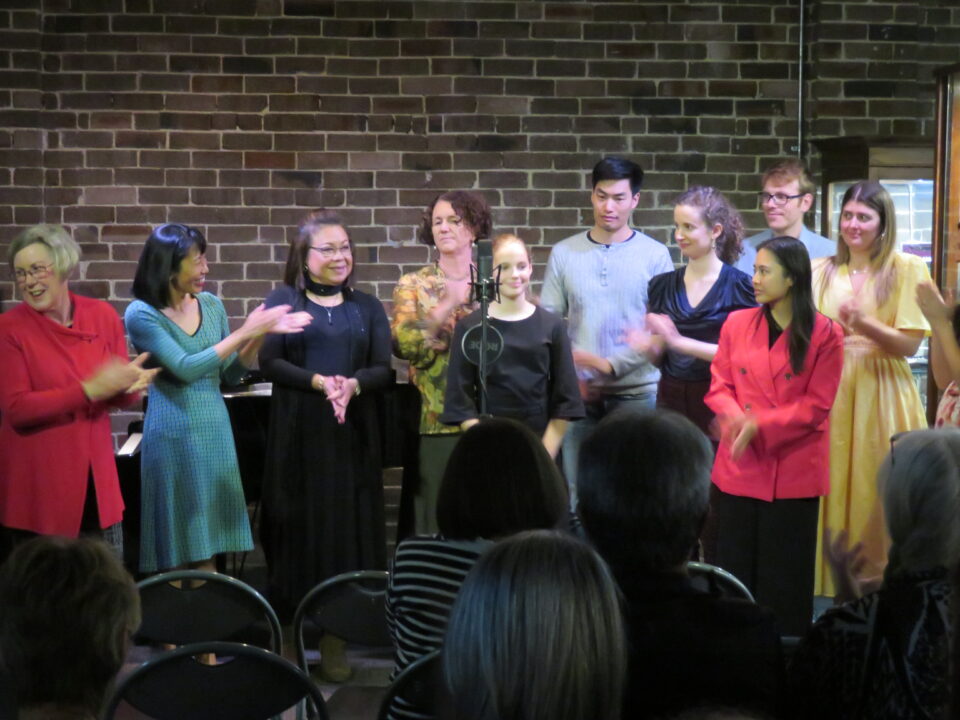
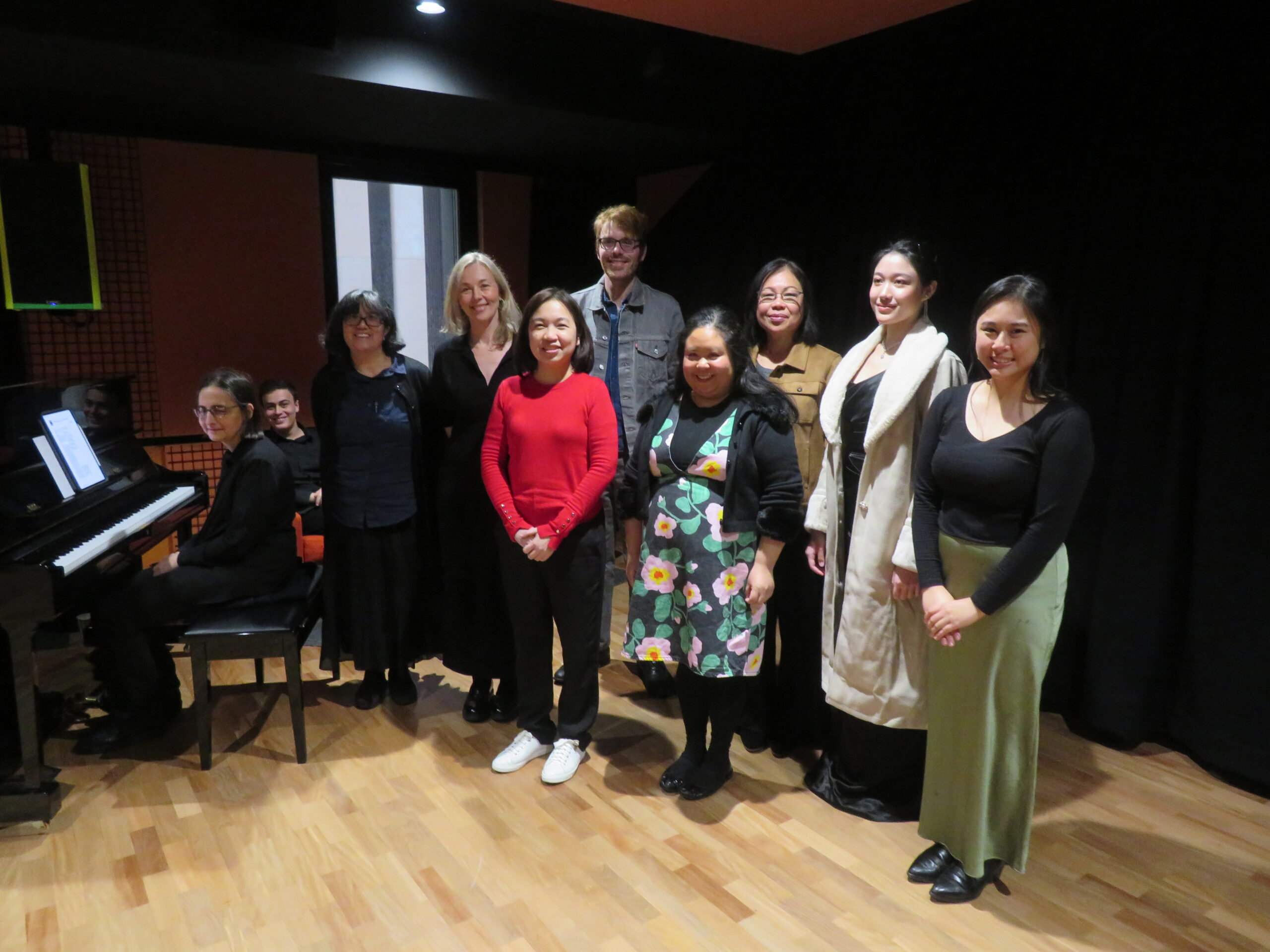
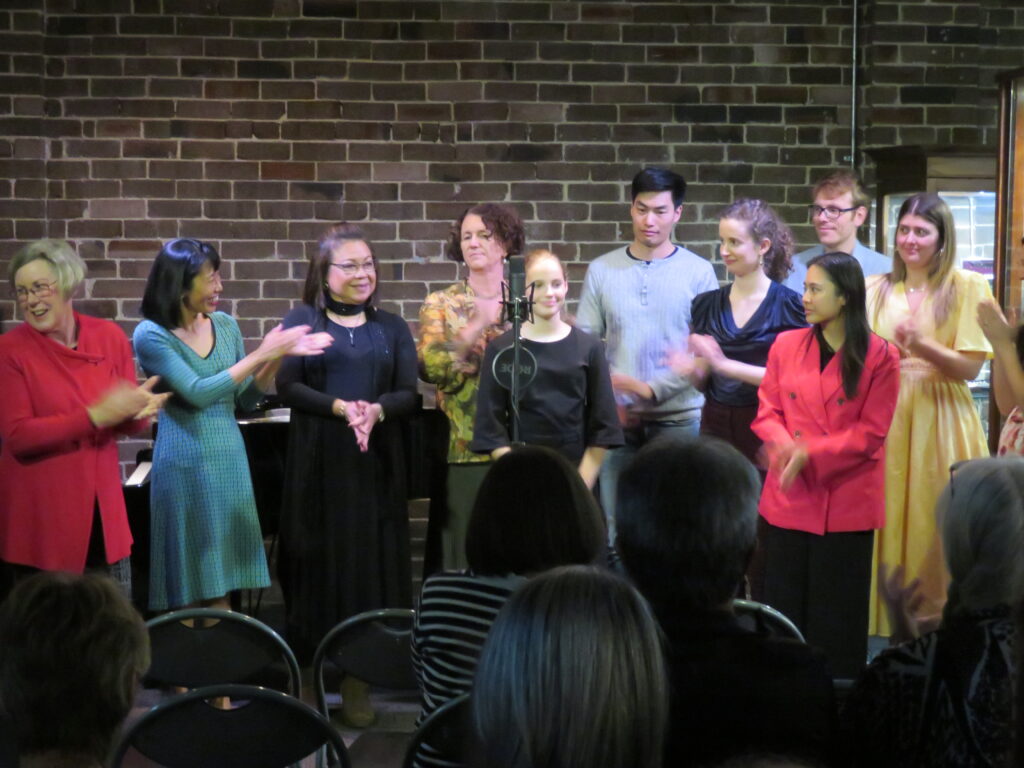
- Studio concert and accompanists
Learning how your voice works and how to improve it takes time and commitment. My goal is to empower singers to commit to regular practice, to feel energised, and enjoy exploring what their voice can do.
If you’re ready to do the work to become a better singer, let’s explore if I’m the right singing teacher for you, with an introductory singing lesson. Sign up to our regular newsletter. Or to find out more, call 0402 409 106.