Feel the fear and sing it, anyway: How to befriend your performance anxiety

Performance anxiety can be overwhelming for some singers, especially those new to singing in public. You might sound great during a singing lesson or in practice, but on the day of a concert, gig or audition, your nerves and anxiety can stifle your sound and your confidence. While positive thinking can be helpful, it doesn’t always work for everyone. The nervousness is still there. What if you could accept your nerves and perform despite them? This is the goal of Acceptance and Commitment Therapy (ACT).
In August, at the ICVT (International Congress of Voice Teachers) conference in Canada, I attended many brilliant sessions. But I stumbled upon one that really piqued my interest: ‘Acceptance and Commitment Training: Finding Artistic Flow While Experiencing Music Performance Anxiety’. It offered many useful insights on using ACT for singers, which I’ll share here.
What is Acceptance and Commitment Therapy for performance anxiety?
It’s a modality used extensively in psychotherapy, sports and athletics. ACT encourages:
- mindfulness to observe a problem or anxiety
- diffusion to separate the internal chatter from you and your work, before and during a performance
- acceptance that by doing the thing you enjoy and want to aim toward, there will be nerves and anxiety
- identifying the values you find in your choices, craft and process; the joy and meaning singing gives your life
- commitment to the above actions: observing your anxiety, diffusing unhelpful self-talk, valuing your craft and journey, and acknowledging its challenges.
ACT can help a singer focus less on technical brilliance and more on the task of performing. It can help remind you why you decided to learn singing and how performing music matters more than any nerves, anxiety and perfectionism.

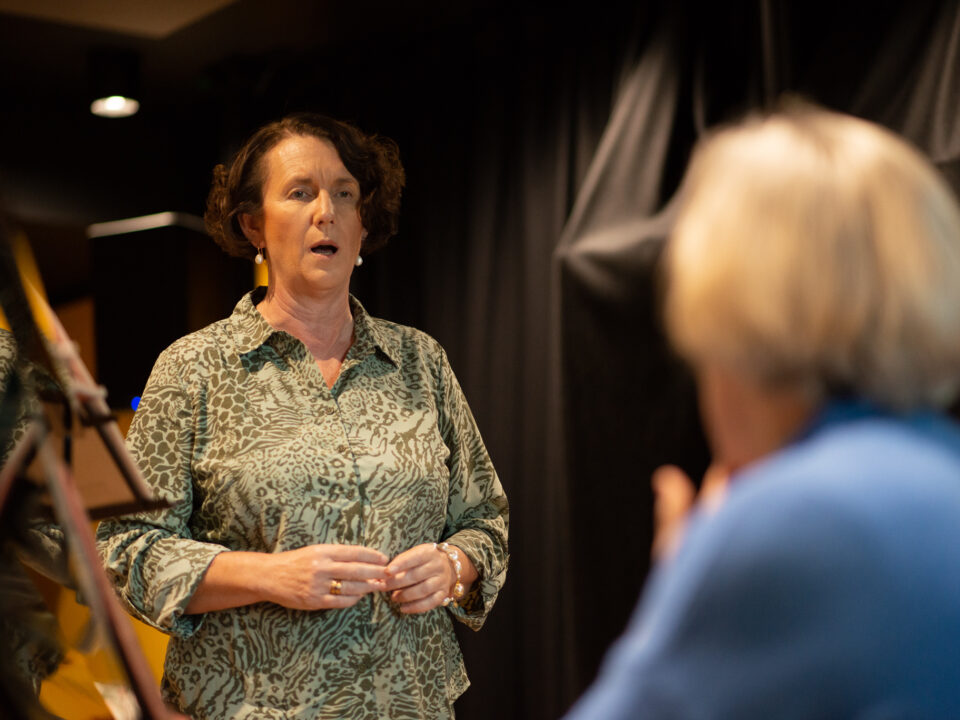
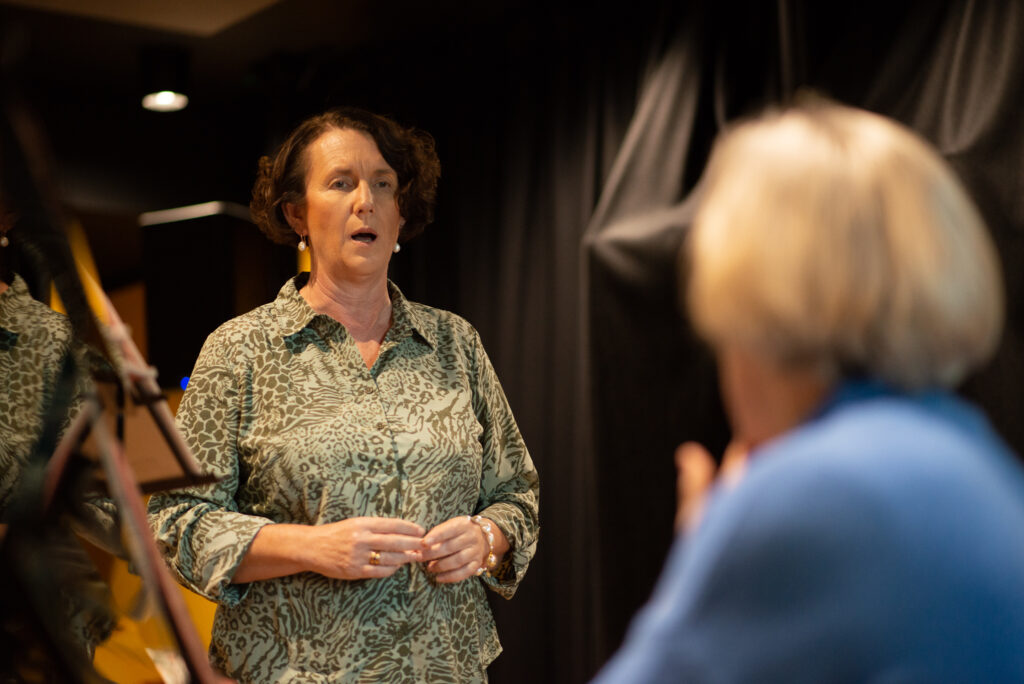
Francesca and Alison, Concert Rehearsal 2025
First, recognise how your nerves manifest
ACT helps you become aware of your own symptoms and behaviours that create anxiety. For example, you might avoid opportunities to perform in front of an audience, grip the piano, sheet music, or mic stand. Perhaps you avoid eye contact or using facial or bodily expression in a song. A fear of making a mistake, or negative judgement of others can exacerbate nervousness. Any of these nervous responses can narrow your attention to a song, its story and character, and your reasons for being a singer, which can cause shame and imposter syndrome around performing at all.
Befriend your performance anxiety to manage it better
Rather than trying to change your thinking or get rid of your nerves, ACT encourages you to feel the fear and accept it will be there, and that those nerves could bring something useful and most likely heighten your performance.
Befriending your fears and nerves lessens their power over you and your performance. When you acknowledge that you’ve chosen to do something challenging, to be part of a learning process, it frees you to move on and enjoy your reasons for choosing to perform.
Focus on your values more than goals
An important part of ACT is shifting focus from goals to values. Singing goals are important to your skills development, but perfectionism and an outcomes focus can get in the way of your enjoyment of singing and the learning process.
Reflecting on what singing means to you helps identify your values. You might value discovery in learning new vocal skills, how singing lifts your mood or brings you out of yourself, or the joy you and an audience share when you perform. Knowing your values around singing brings greater meaning, so when the nerves hit, you can focus more on those instead of any goal of singing perfectly.
This video, from doctor and ACT therapist, Russ Harris, is a fun overview of the benefits of switching your focus from goals/outcome to values/meaning.
Engage with your thoughts like they’re a person
Anxious thoughts can be like a runaway train, and ACT helps you accept and adapt your inner voice so it works with you. Try these ideas to diffuse anxious thoughts and reduce their power:
- Give them a silly name, like The Ministry of What Ifs, Catastrophe Clown, Sir Spiral a Lot.
- Speak the thought out loud and answer it with a response:
“My register break may never be smooth and blended. So, I’ll just take several low breaths and accept that this is a challenge.”
“Just as I get up to perform, an anxious thought pops up. It has so many notions about my journey, so I am just going to sing anyway.” - Ask your thoughts:
“Does this define me?” or, “Is this really true – Am I such a poor singer and performer?” - Thank your thought, then tell it you’re going to get on with the task at hand, anyway.

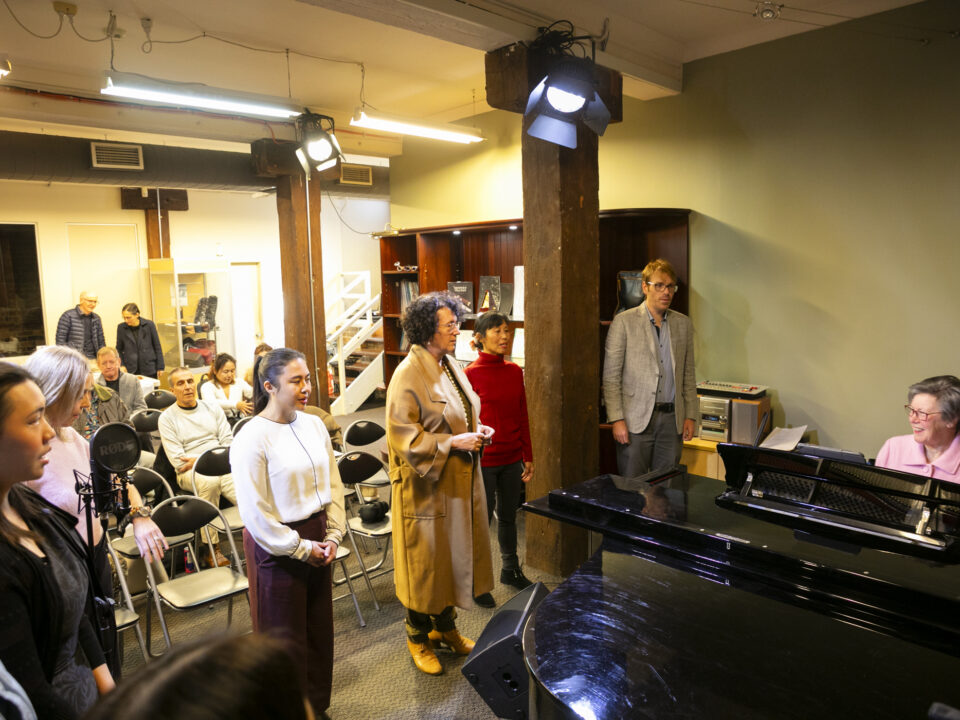
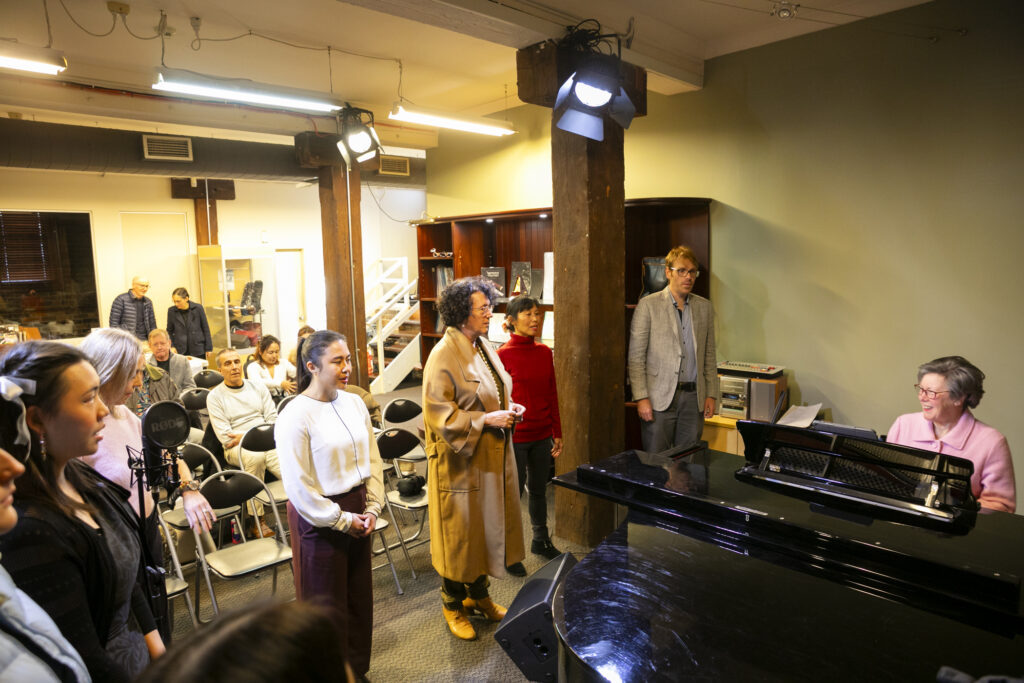
Mercia performing at our studio concert
Try these exercises to put distance between a thought and your response
- Write the thought on a piece of paper, then scrunch it up.
- Write down the thought but leave off the last word. Then write it again and leave the last two words off. And so on.
- Label the thought: e.g. The Board of Worst-Case Scenarios; Panic Productions; Speculation Nation.
- Write the thought down, then reverse the word order.
- Imagine your thoughts as food items passing by you on a sushi train, as in this video from Dr Russ Harris.
Using ACT techniques, you stop linking your happiness to an outcome or goal. Instead, you learn to observe and describe what happened, such as: “I missed a word in the second verse but I moved on and no one noticed”. So, sing it anyway and enjoy your journey.
Kathleen Connell can help you reconnect with why you love singing, so you enjoy your performance as much as your audience.
Browse the in-person or online training options, or call 0402 409 106.