
In our previous blog post, we looked at using a strategic mental process in your singing practice. This month, we’ll look at one particular approach: self-regulation, with some specific singing practice tips you can try.
What is self-regulated learning in singing?
It’s based on research looking at the mental and physical processes of elite athletes. As we’ve covered here before, some aspects of athletic performance training can work for singing training – which is a physical and mental process, after all!
With self-regulated singing practice, you direct your own learning process, using these steps:
- Plan: Before you practise, decide what singing goal you will work on, and think through the actions involved.
- Perform: Perform the actions, noticing how you do them.
- Evaluate: Reflect (without judgement!) on your performance, acknowledging what you did well, and what needs improvement.
Motivation matters
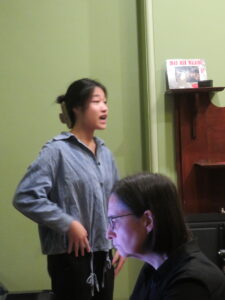
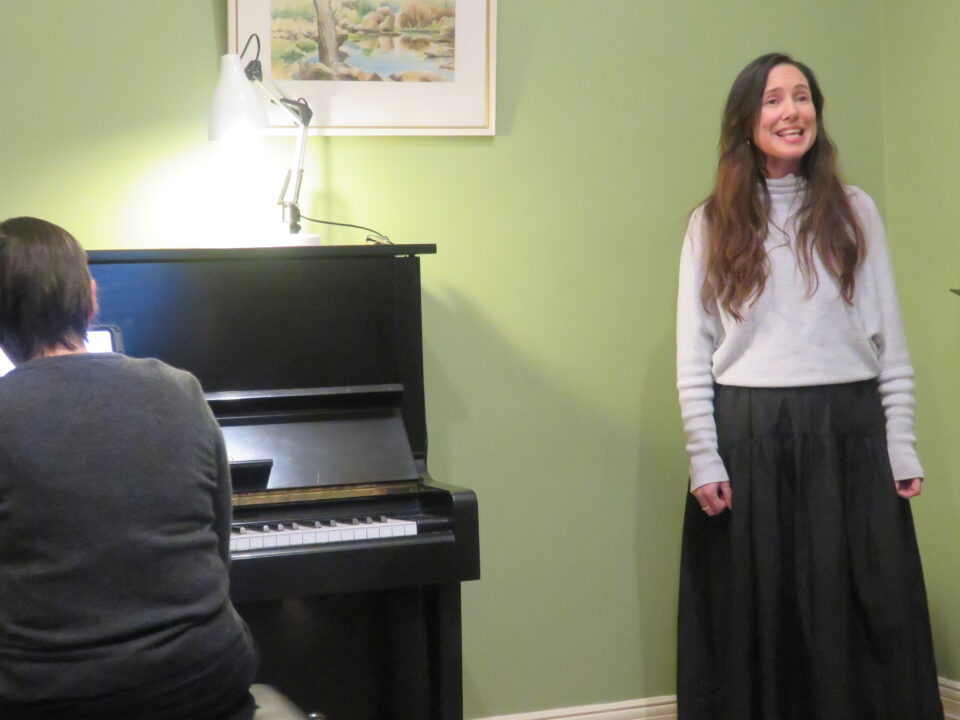
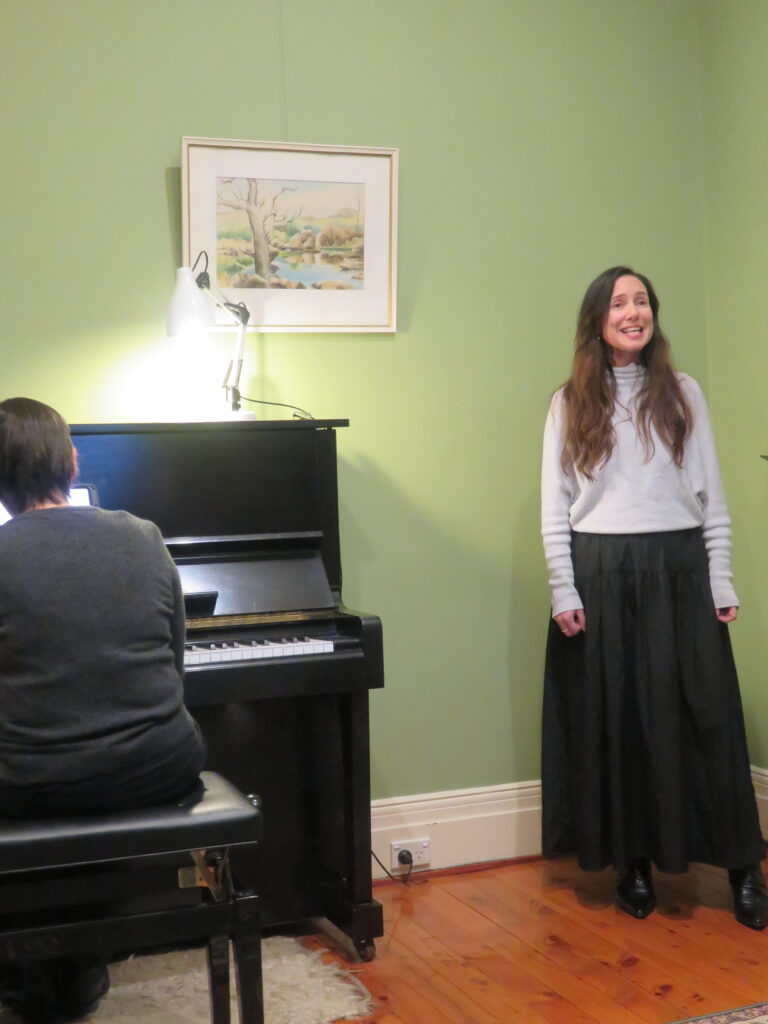
Alison & Victoria Rehearsal
Working out your motivation for singing can inspire you to keep up a regular practice routine. Do you sing because you’ve been told you have a lovely voice, or because your parents encouraged you to learn? These are extrinsic reasons. Or do you sing because it’s how you express your creativity, it brings you joy, or because it can help protect your brain? These are intrinsic reasons. Neither is better than the other, but studies have shown that young musicians who learned for extrinsic reasons made slower progress.
In a 2022 study of Dutch national-level swimmers, cited in The Bulletproof Musician’s blog, higher-performing swimmers were found to use self-regulated learning processes differently to lower-level swimmers.
Higher-performing swimmers reflected more during training. In singing, this can mean listening more intently, and specifically, to yourself while performing, and identifying how your progress meets your goals, so you can work on weaker skills.
Higher-performing swimmers had lower effort scores, suggesting they prioritised their efforts to more important tasks. This may have made their training more efficient, requiring less effort.
Swimmers who evaluated their performance after training improved the most. In singing, this could mean allowing time at the end of your practice to reflect on how you went, and deciding on what can be improved next time.
Try these practice tips
- Start small
- Try just practising, with no process goals, no monitoring, no reflection.
- Just sing an exercise or part of a song for 6 minutes.
- From there, select a process goal. Choose one small action, like raising your soft palate, or opening the ribs or throat.
- Practise this for 6 minutes. With your process goal in mind, monitor how you do it. Make any adjustments you feel you need – trust yourself here. Try again.
- Then reflect on the result. What improved? Did the adjustments help?
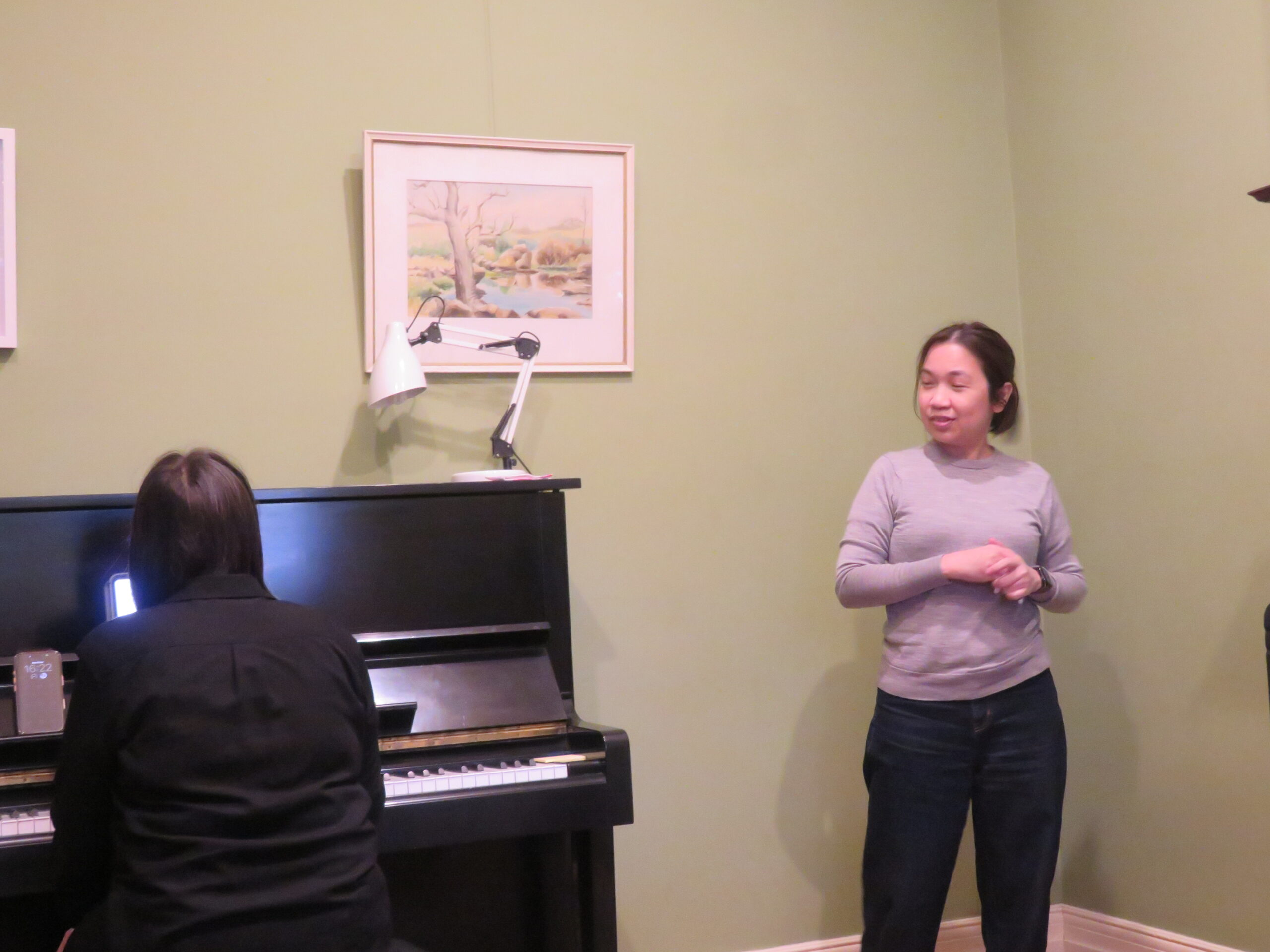
Celeste and Alison Rehearsal 2026
- Stop. Reset. Correct
- Key to self-regulated learning is to know when you’ve made a mistake, to stop singing and correct it. What’s important is the mental process you go through before, during and after each repetition. These are the planning, performance and evaluation steps.
- CHOOSE: 1 (or 2) tricky phrases in your song or an exercise that challenges you.
- Before singing, PLAN: What do I want to sound like? What technical strategies will I use? E.g. raise my soft palate, set up breath, monitor breath flow (support and control), achieve even resonance throughout my range.
- PERFORM THE ACTION: Sing the phrase, while paying attention to the process and skills you use.
- REFLECT AND STRATEGISE: After singing, evaluate: Was my tuning better? Did I raise my soft palate enough? Did I achieve well-managed air flow? Then, strategize: What adjustments do I need to make?
- Key to self-regulated learning is to know when you’ve made a mistake, to stop singing and correct it. What’s important is the mental process you go through before, during and after each repetition. These are the planning, performance and evaluation steps.
Remember, leave some time to reflect after each practice session, to celebrate your successes, and plan your approach for your next practice. This is how to embed your learning, acknowledge the work you put in, and motivate yourself to keep going.
With Kathleen Connell, you’ll learn personalised reflective processes to use in your own singing practice, for real results. Browse the Studio’s 4 singing lesson options.