Move your audience with these acting tips for a better performance
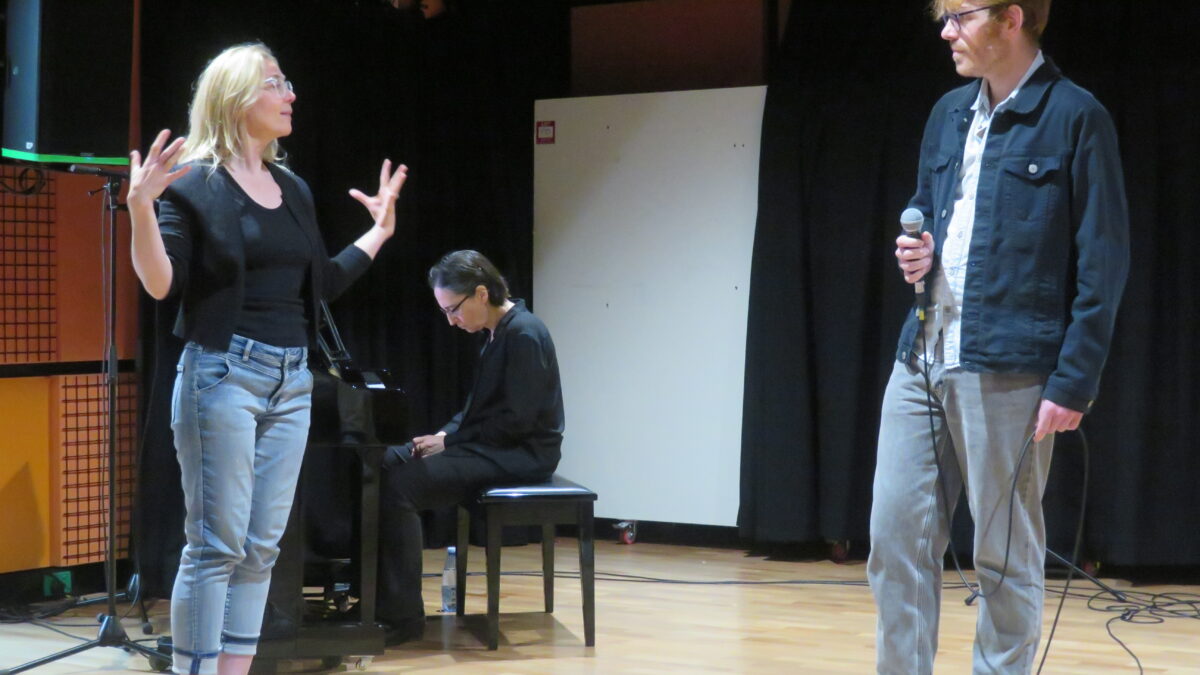
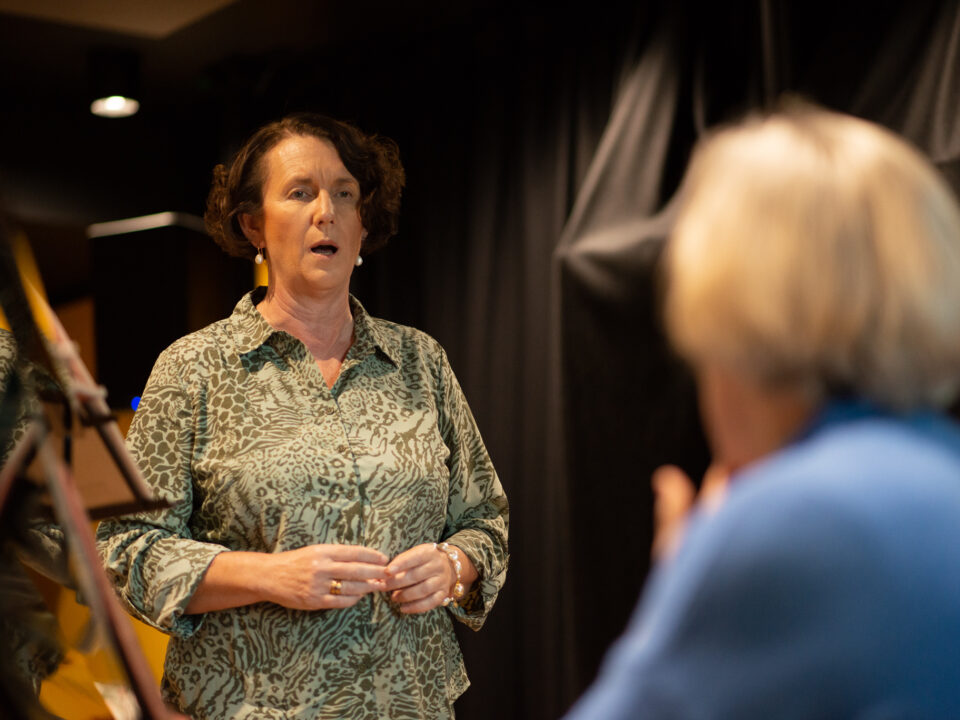
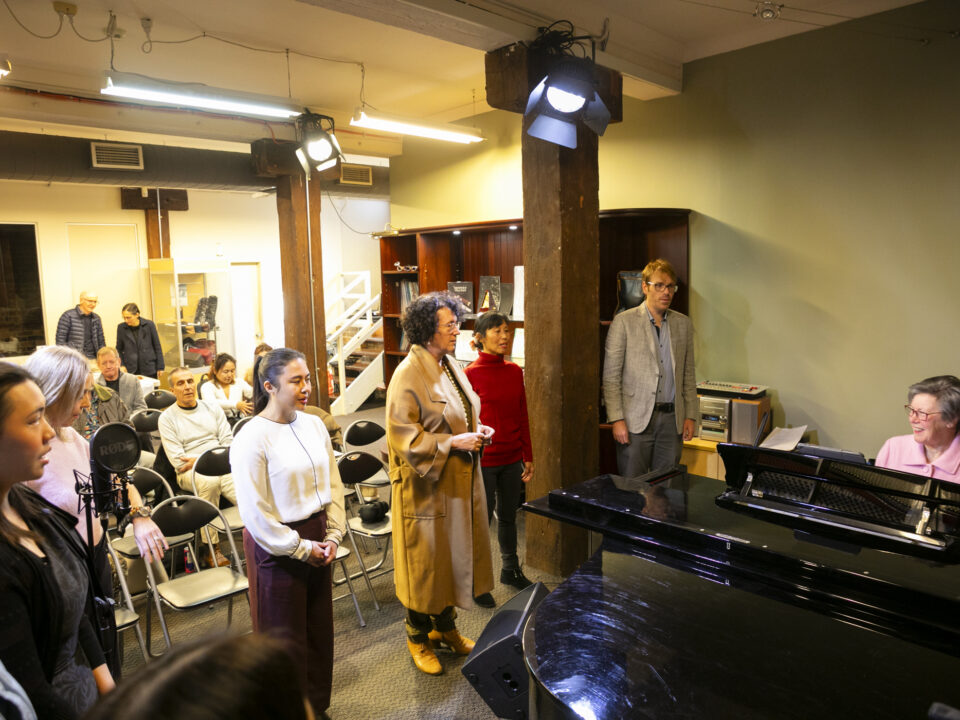
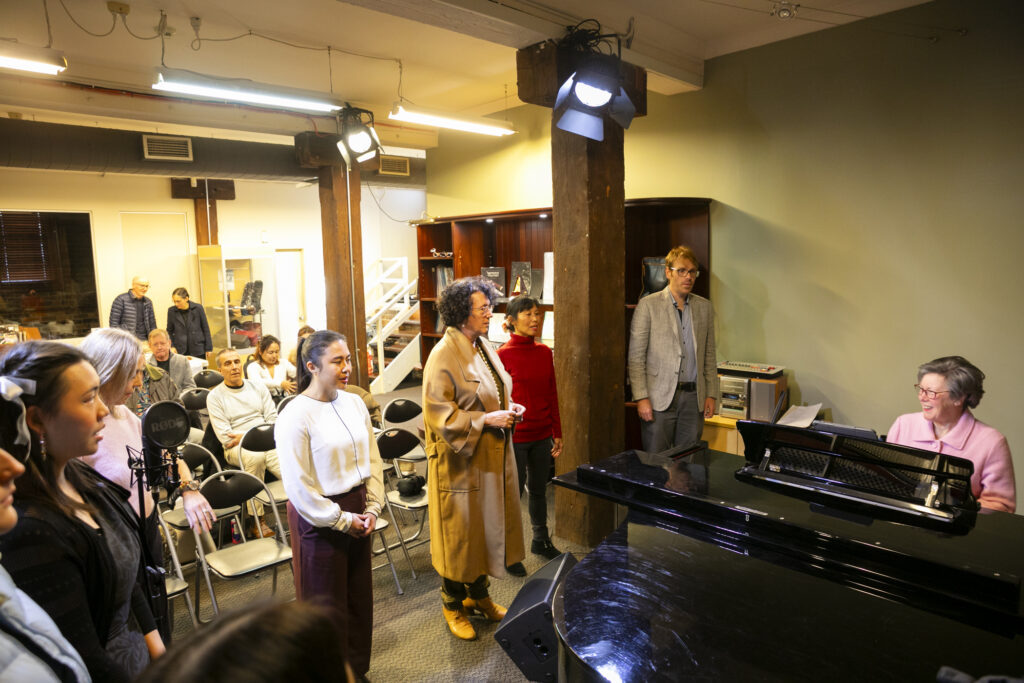
Singing in performance often requires acting skills, which might be unfamiliar to some singers. So, we recently held a Storytelling through song group workshop, where singers received targeted acting direction to help them bring more life, emotion and connection to their performance. Five students brought one song to work on with our teacher, fellow studio singer, Gina Cohen and our studio accompanist, Alison Cameron. Gina is an accomplished teacher, playwright, theatre director and actor/performer in plays and musicals.
Increased confidence when performing was a common goal among the participants, who worked on a mix of music theatre songs, standards and pop, in our spacious studio at City of Sydney Creative Spaces in the CBD. During Gina’s physical warm-up exercises, the large room allowed singers to move freely, exploring how they use a space as if it’s a stage, while being aware of each other in that space. In another exercise, called ‘hot seat’, singers sat opposite a partner and convinced them about their song; the reason for it, its place and time, why it’s important and who will listen to it.
A fun exercise was using the phrase, “I’m coming to your place for pancakes”, with Gina giving each singer an emotional direction to say it to another singer as they walked towards them. Singers infused the phrase with emotions such as joy, misery, anger, disappointment, conspiracy and hope.
Suitably warmed up, we got down to singing. After a first run through, Gina challenged each singer to approach their songs in unexpected ways, before they performed them again. Here are some reflections from each singer’s experience, to consider adding to your own approach to telling a story through song.
Work the stage – make your character move
For Amanda’s song ‘Something Wonderful’ (Rogers and Hammerstein, The King and I), she had her newly married niece in mind, offering the wise advice that not all men are perfect throughout a marriage. Amanda wanted to convince her niece not to leave the marriage.
Gina asked fellow singer Alex to role play Amanda’s niece, attempting to physically leave the room while Amanda moved around to stop her. When Amanda sang the song again, her interpretation was stronger, more intense and meaningful.
Amanda reflected: “I enjoyed trying to stop Alex from leaving – it took my mind off thinking about my singing technique. It was a lot of fun and had a positive impact on my singing. In future, I will try to engage the audience from the minute I walk on stage to sing and consider getting closer to them and moving around on stage.”
Engage one on one with your audience

Nick approaching each person in the group, to convince them he was seducing them, as he sang.
Nick sang ‘Ole Devil Moon’ (Harburg and Lane, Finnian’s Rainbow) with seduction in mind, standing behind the microphone, about a metre away from the group. Gina asked Nick to take the mic off its stand and approach each person in the group, to convince them he was seducing them, as he sang. Then Gina asked Nick to extend his hand to one woman and bring her into the centre. In his second performance, the seduction was real and intentional.
“Holding the microphone was a bonus, particularly when moving around, giving me freedom for other performance aspects,” Nick observed. “I’ll be more playful with how I deliver my songs next time, particularly my facial expressions.”
Use physicality and eye contact
Alex sang ‘Hero’ (Afanaseiff and Carey), aiming to encourage and empower a listener. This is a big song, which Alex has worked on intensely. Gina and Alex discussed how the listener might have experienced life before this song, deciding they had been completely devastated by an event and not interested in encouragement or uplifting songs. Gina asked Celine to curl up in a ball on the floor and refuse to open up, as Alex sang the song again. Alex’s task was to convince Celine to uncurl and listen to the encouraging words. This acting direction really made Alex sing the song with strength, meaning and sincerity. When Alex sang the song again at the microphone, she used meaningful hand gestures and looked directly at the audience, performing with intensity.
Alex said: “I was surprised how much having a character and their audience in mind makes a difference to a performance. Next time I sing, I’ll keep these in mind. I’ll also try singing with different emotions to explore different meanings in the song.”

Alex with Celine, working on Hero
Flip the song’s meaning
Celine’s interpretation of ‘The Nearness of You’ (H. Carmichael, from Romance in the Dark) was one of recalling a lost loved one. Gina chose a surprising acting tool for Celine: rather than loss and recollection Gina asked Celine to sing the song angrily. This was challenging for Celine, who finds anger oppositional to her calm self. But she gave it a go, singing with fury, annoyance, and anger, finding it gave her a sense that emotions are important when singing and need full expression.
As Gina and Celine showed, choosing the opposite emotion to what you think a song is about can change your perceptions, your relationship with the audience and free up your performance. Celine said she learned, “not to be afraid to unleash my emotions. When I know who am I singing to, the connection starts immediately on stage.”
Give your audience a character, too
Jon sang ‘Stars’ from Les Misérables. Then, he and Gina discussed who Javert’s audience might be as a character. They decided on a judge and jury. Jon’s task was to convince them that his plan, and pursuit of the felon, was the best and Godliest way.
Jon sang again, with greater intensity. He loosened up his arms and hands, and his facial gestures were more forceful. Starting with soft but meaningful words, Jon built the song’s dynamics to a high point, then soft again at the end with a final cry of determination to pursue the felon, sung with strength.
Jon said: “I have a better idea of how to make the intended ‘audience’ more specific, which helps bring out more nuances in feeling when singing.”
Gina’s main storytelling takeaway is: Decide who your audience is. Don’t worry about whether you’re singing well or not, but commit yourself to the character and their intention. Commit yourself to the emotion and the objective you want the audience to understand and feel.
This workshop was another wonderful, collaborative way singers learned stronger performance skills. Workshops really can take your singing to a higher level. Look out for more in 2026.
If you’d like to improve your confidence and storytelling in performance, Kathleen Connell can help you get there. Check out our in-person or online singing training options, or call 0402 409 106.