We know singing is great for brain health. But what happens in your brain when you learn to sing?
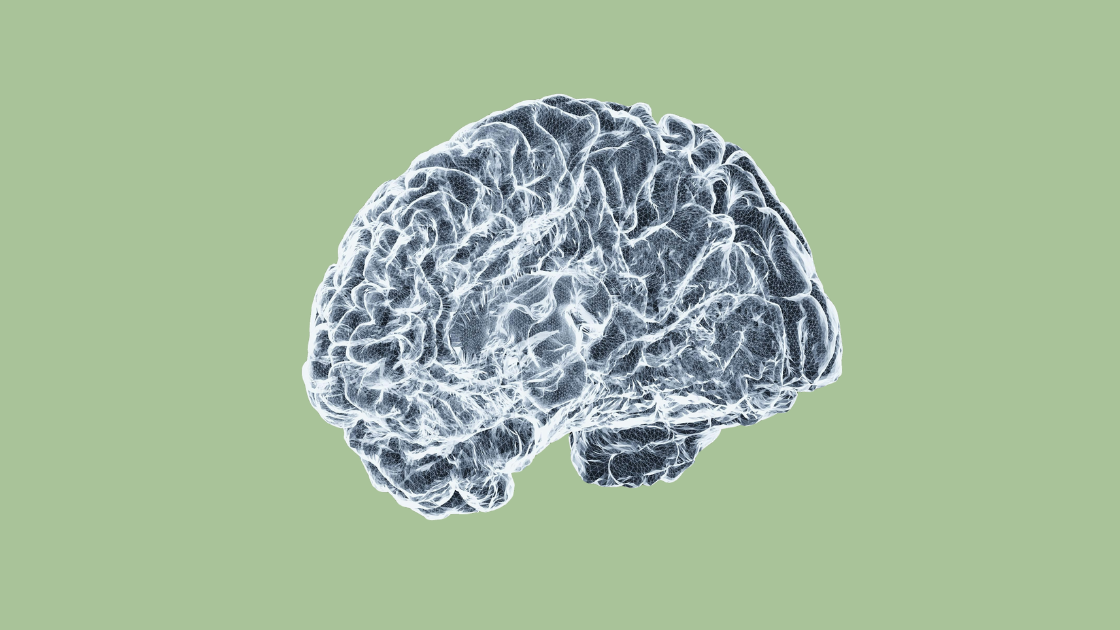
Learning to sing helps improve your brain function and health, maintaining good brain health over your life. As you sing, your brain’s neurons fire up and make connections to related neurons throughout your body. The more often those connections happen (during voice lessons and when you practise singing), the stronger they become, leading to a healthier brain and nervous system.
I recently attended two online seminars on ‘Singing and the Brain’, through London’s Voice Study Centre. Based on the work of neuroscientist/musician, Dr Patricia Izbicki and psychologist Dr Michel Belyk, the presentations covered what parts of the brain and nervous system are involved in singing, and the physical, emotional and psychological benefits.
Inspired by their work, over two articles, I’ll look at how learning to sing benefits your brain. In Part One, we’ll cover the science of what happens in the brain when we sing. In Part Two, we’ll look at the overall health benefits: emotional, social, and lifespan-related.
What parts of the brain are involved in learning to sing?
- The frontal lobe, behind your forehead, manages learning, memory and planning. It contains the motor cortex, which controls bodily movement, and in singing, helps you achieve pitch accuracy and rhythm.
- The parietal lobe, behind the frontal lobe, receives and interprets sensory information such as sound, vision, texture, pressure and spatial awareness, including proprioception – which helps your body sense its position and movement.
- The primary somatosensory cortex governs singing sensations, including the work of the larynx, tongue movement, vocal tract shaping (including soft palate), pharyngeal opening, eyes and nose movement and, to my surprise, the movement of your fingers.
Over my many years of teaching singing, I’ve noticed when singers are anxious about singing, their fingers and hands may stiffen or move involuntarily. I often ask singers to shake out their hands when they sing, or preferably, use expressive gestures when singing.
- The occipital lobe manages lip movement, facial expressions and rhythmic motion, and aids your postural alignment when singing.
- The temporal lobe, above the ear is handles hearing and auditory processing. The left temporal lobe processes course or rudimentary musical sound, while the right is involved in the fine processing of sounds, such as those that tune vowels.
- The basal ganglia plays a role in learning new songs, as it governs habit formation. Being part of the brain’s limbic system, it’s also involved in motivation and reward processing – that sense of achievement as you learn. And it stores emotional memory, assigning it as good or bad, e.g., if singing at school was a bad experience, you might avoid singing based on this memory. The basal ganglia also controls higher order thinking including prosody, which gives us dynamics, tonal colour and pitch changes, and rhythmic patterns in our voice, when speaking and singing.
Singing changes your brain for the better, through neuroplasticity
As we’ve covered in a previous article, musicians’ brains are different, with studies finding musicians have a larger ‘bridge’ across the brain’s two hemispheres, allowing messages to travel faster and in creative pathways.
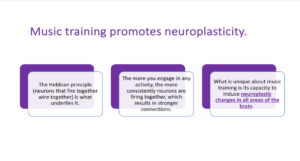
Diagram credit: Patricia Izbicki, PhD (Voice Study Centre, April 2026)
Neuroplasticity is your brain’s ability to change, adapt and strengthen its function through new experiences or learning new skills. The act of learning helps your brain rewire and reorganise its network of neurons – the long ‘wires’ that send messages between your brain and muscles. Neuroplasticity works both ways; the brain discards connections you don’t use, while consistent practice keeps the relevant networks strong. Remarkably, your brain knows which neuron to use for which movement, and uses a combination of neurons in what we know as a ‘neural pathway’.
According to Dr Belyk, brain pathways that process music include:
- Auditory: processes frequency, duration and acoustic loudness or softness. Be sure to protect your ear canals in loud environments.
- Higher order pathways: include using harmonisation, accuracy in singing intervals and keeping a rhythm
- Focus and keeping track of music in real time: strengthens your attention and working memory skills
- Episodic memory: includes recognising music and its’ associated memories
- Moving and playing: keeping time, and moving while singing
- Emotions: includes the reward and pleasure of singing.
Singing facilitates neuroplastic changes across all brain regions, which can offer broader cognitive benefits than other, single-focus skills learning. Singing simultaneously engages the motor cortex, auditory processing, language centres and emotional networks.
Brain, nerves and muscles work in harmony

Photo from Unsplash
In controlling the action of your muscles, your brain decides how much action to use for a task. In singing, these actions can be intricate, so need to be learned and practised. Think about low breathing for singing and the push-pull muscle activation required to feed a balanced air pressure to your vocal folds to create sound.
Part of learning a new singing skill is, when you perform an action, you notice how it feels. This trains your brain, and nervous system, to manipulate and integrate each part of your vocal apparatus. With repetition, you build a working memory of sensations, along with ‘movement memory’.
In our technology-driven world, you could learn to sing online but it’s only with the supervision of a knowledgeable singing teacher that you learn how to train your brain to improve your vocal skills and work through any anxiety, so you enjoy the rewards of what your voice can do.
Browse the Studio singing lessons. And sign up to our monthly newsletter for singing tips and performance workshop dates.